

Should You Play Pro Volleyball Overseas?
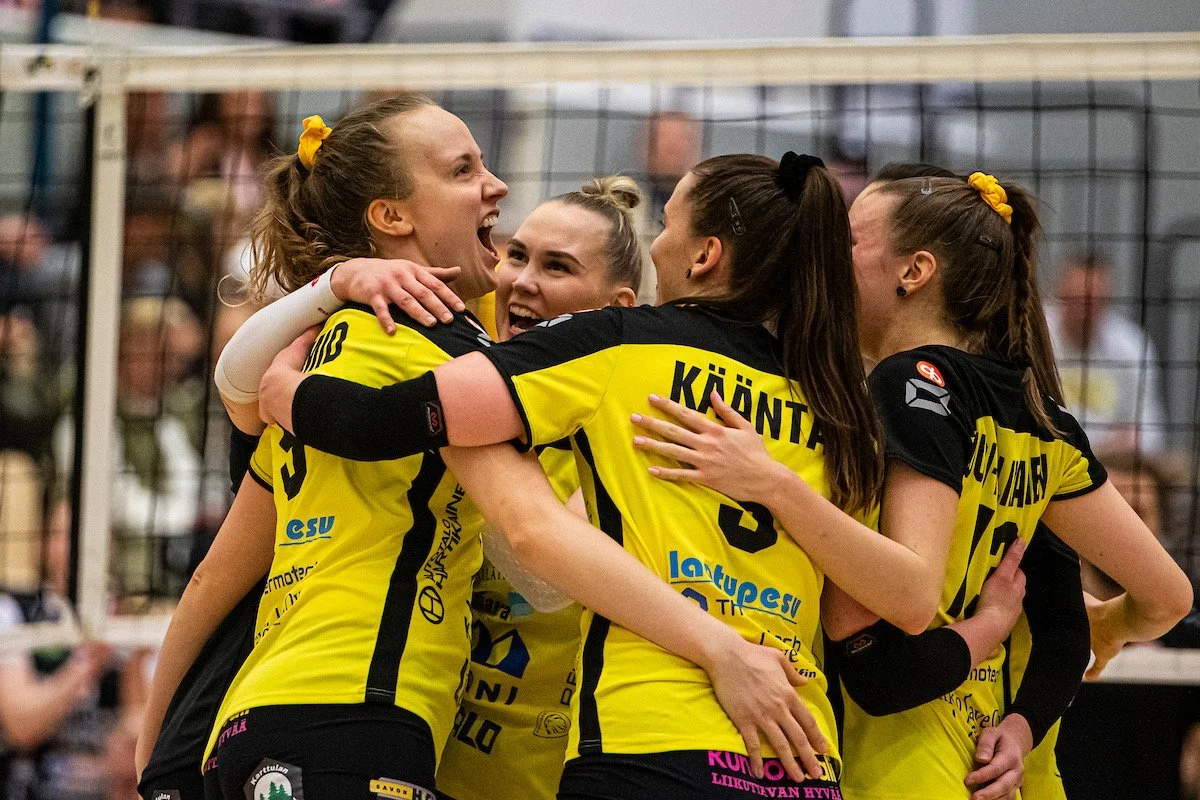
If you are currently a college volleyball player and your college career is nearing its end, you may be asking yourself, or have other people asking you, if you are going to continue your volleyball career overseas. I was once in this same position. I decided to take that leap in 2017 and am now in my 7th season abroad, so I thought I would share my advice to help you make your decision.
The first question to ask yourself is- do you truly love volleyball still? Or are you just looking for a reason to postpone the real world a little longer? Both are valid reasons to play overseas, but a “yes” answer to the first question will make your time overseas a lot more enjoyable. Playing overseas is not for the weak. The seasons are often 8+ months long and you will have days and weeks where you’re exhausted, everything is hurting, you’re not playing well, the team isn’t doing well, and you still have to push through. If you don’t truly love volleyball anymore, it will not be easy to go through these periods. Sometimes you have a contract without a car, and you have to walk 20 minutes to and from practice every day in the dead of a European winter. You’re away from your family and friends, most of the time not being able to speak the language, understanding less than 50% of what’s going on at all times, so having love for the game is the only way to have a good experience despite all these challenges.
My next thing you should consider is that playing overseas is nothing like playing college in the U.S. When I signed my first pro contract, I was expecting an upgrade from the university system, imagining even nicer locker rooms, weight rooms, huge arenas, really good medical staff, and upgraded everything. Depending on your level you might get this, but I have come to find that even the top teams in really good leagues often don’t have the nicest facilities. In the French first league, one of the top teams built a brand new arena a few years ago that is just for women’s volleyball, and even that weight room looked like one you could find in a hotel somewhere. So before signing a pro contract you have to set your expectations that it is going to be nothing like your college experience. You could be the only foreigner on your team. Oftentimes you are the professional and the other local players on your team work or go to school, so you might be having more practice than them and the expectations for you will be a lot higher than for them. You might have to drop down several levels of play when first starting out and work your way up through the system. You might have to be your own physio and strength coach and you will have to take your recovery very seriously because there is not the same level of treatment as there is in the U.S. In college, you can go see the trainer every day, before or after practice, on your off days, use all the recovery equipment possible, but overseas you MIGHT get to see your physio for 20 minutes a week, sometimes essentially in a closet with a table in it at the gym. And sometimes you’ll have a hard time communicating with each other, which adds another layer of difficulty onto it.
Sometimes your coach won’t speak a word of English and you’ll have to rely on your teammates to translate for you. Sometimes you’ll go a whole day without speaking to someone in person. It’s overwhelming and challenging to do things like go to the grocery store, go to the doctors, and do all the bureaucratic necessities. And sometimes things that seem like common sense to us, just do not happen. You won’t always get your salary on time, they might be late with your visa, the housing situation might not be the best, and you might be in a really small town without much to do. Now you might be thinking to yourself, Sarah, are you trying to scare me out of playing abroad? And of course not, I’ve done this 7 different times! But I just have to make the reality of playing overseas very clear before you go into it, because a lot of players go into their first season thinking it will be like college 2.0, and are in for a rude awakening once they get to their first team. So now that I have set the expectations of what playing overseas can be like, it’s time to get into all the wonderful things about it.
The bottom line is that I think everyone should try it out for at least one season. The thing that pushed me into doing it when I was first considering it was my club coach saying to me, “What’s the worst that can happen? You spend 8 months in a new country, learn a lot of life lessons and have new experiences, and come home. In the grand scheme of life that is such a small blip of time.” And he was absolutely right. Being able to live out of the country is a big dream for so many people and playing a sport is such an easy way to do it. They take care of your visa, taxes, housing, etc, so all you have to do is show up, play, and enjoy living abroad. Now this is obviously oversimplified, but I do think we as athletes have such a cool opportunity to at least try out living in a foreign country without the extra worry of how to make it happen.
When you live in another country, you grow so much as a person. You get to meet people from new places, learn new languages (even if it’s not fluently), experience other cultures, try new foods, explore new cities, and you learn so much. Depending on where you’re located, you get to travel to so many places. During one week this season I was able to travel to Bruges and Brussels in Belgium, and Lille and Paris in France. In one week, even with practices and games. It always depends on your schedule, but even in the higher leagues you’ll get a few weekends off per season. I have now traveled to 20 countries in Europe. Some were from my time studying abroad my senior year but the others were from playing overseas. You become so independent and are able to do things like navigate public transit in a foreign country, plan trips, travel solo, and you just become a way better, stronger, more well-rounded person. I also now have at least one friend on every continent.
Now, obviously my last positive point about playing overseas is the playing overseas part. I get to play a sport as my job. My JOB. I get paid to play a game everyday. I get paid to go to the gym. I get paid to travel. For games if it’s far away, we often go a day early and leave the next day. Sometimes you’ll get to explore the city where you’re playing. My very first game in France we played in Paris, won, and took an Uber to the Eiffel Tower afterwards. How cool is that? While people are sitting at their desk working a 9-5, I get to play a game and stay in shape. I get to play in front of crazy crowds cheering in foreign languages and laugh with my teammates. Even during the hardest periods, at the end of the day I get to play my favorite game every day.
So if you’re considering playing overseas, I would say go for it. At the very least you try it out and if you really hate it, you can leave early, but at least you gave it a shot. As long as you go in with the right mindset, knowing it’s not going to be like college and open to the adventure, you can have a great experience no matter what the season looks like. There will be very high highs and very low lows no matter what, so if you have an attitude of adventure, positivity, and gratefulness, you will enjoy it. And even if you only try it out for a season, you will have amazing stories to tell people one day. I know I do. And I wouldn’t trade my experience for the world.
If you need help navigating this experience, please don’t hesitate to reach out to me on my website contact page or via DMs on my Instagram or Tiktok. I actually just signed with my agent Joost Kooistra to recruit new talented players to his agency, so if you are looking for an agent, please reach out to me with your CV, highlight video, and match film and I look forward to being in touch!